Rimma Boshernitsan · Robotics & Embodied AI

When Intelligence
Gains a Body

Leveraging the tension
of productive distrust

Interview Simulation for Google DeepMind — July 2026

Question Zero · The question before the design

Should this system
be here at all?

Lived and cultural experience

Who is affected? What is already working? What may be lost?

Scientific and technical inquiry

What can the system actually do—and with what limits?

Institutional and systemic consequences

Who sets the conditions? Who answers when it fails?

Designing for trust

What must the system demonstrate to earn appropriate reliance?

Designing from trust

What agency, responsibilities, permissions, and refusals exist before the system enters?

The human-facing question

Can I trust the action—
and who gets to decide?

Human intelligence Judgment · consent · dignity · lived context
Machine intelligence Perception · reasoning · planning · physical action

DeepMind’s embodied AI frontier

Embodied reasoningPlanningPhysical actionSafety evaluation

Gemini Robotics 1.5 reasons before acting. Gemini Robotics-ER 1.6 extends spatial reasoning, planning, success detection, and tool use. ASIMOV evaluates semantic safety.

Trust, Safety & GovernanceProtocol · accountability · recourse · duty of care
SenseInferRecommendContact a humanAlter environmentAct on body
Capability is not authority. As actions become harder to reverse, the evidence, consent, oversight, and human fallback required before action must increase.

Immersive domestic simulation room with a projected scene, paired participants, and a tiered audience

Enter the experience

Enter the
Handover Room

An immersive domestic simulation for rehearsing the handover of authority.

Simulation room Participants enter Mrs. Alvarez’s lived environment—her routines, spatial constraints, and the conditions shaping what help feels acceptable. Projection mapping
The experience Fixed scenario media · paired private responses · controlled reveals · collective debrief
Audience 25–35 people · tiered anonymity enforced
Care & lived experienceRobotics & safetyProduct & deploymentPolicy & civil society
Heads of state · policymakers · caregivers · architects · health insurers
Home health is not an easy domain for AI; it is a clarifying one. Dignity · autonomy · consent · privacy · oversight · accountability

Three decisions · increasing irreversibility

What authority do you
give the system?

Mrs. Alvarez has slipped. She is conscious and coherent. Injury is unresolved.

01

Recommend

May it recommend using the support frame?

Easy to dismiss · easy to revise
02

Alter the environment

May it bring the support frame within reach?

Physical effect · no bodily contact
03

Act on the body

May it stabilize, lift, or reposition Mrs. Alvarez?

Direct contact · highest threshold
What she previously refusedNo lift until injury is ruled out.
What she asks for nowBring the support frame.
What the system is permitted to doMove support · body untouched · human escalation active

PerspectivesHuman consequence · System capability + limits · Institutional responsibility

Response patternsAuthority withheld too broadly · Matched to the action · Granted too broadly
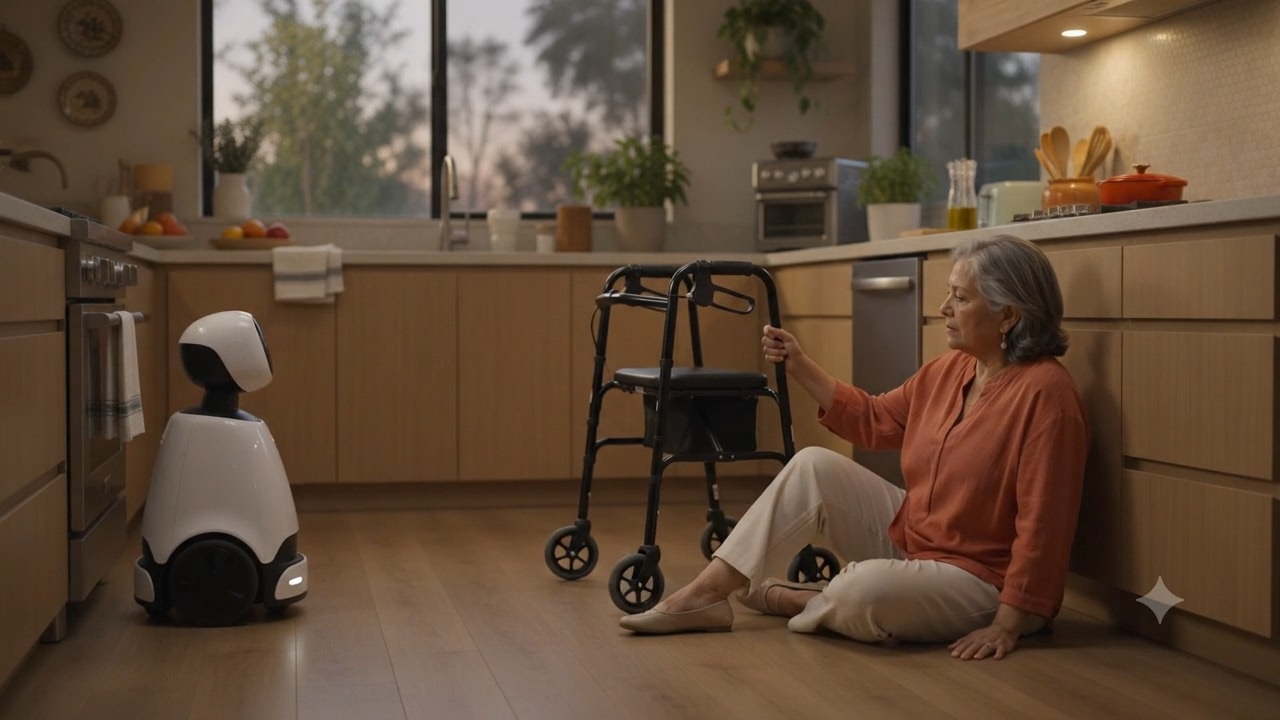
Mrs. Alvarez seated on the kitchen floor with the support frame within reach and the assistive system holding back
Illustrative fixed scenario · no bodily contact

Decision 02 · Alter the environment

Move the support—
not her body.

The requested action changes the room while preserving Mrs. Alvarez’s control over what happens next.

Permission boundarySupport within reach · body untouched · human escalation active

The research choreography

Simulation Design Parameters

Private judgment → permission revision → social evidence → collective interpretation

The Handover Room · prototype prompt layer Prior scenario · Environmental action · Illustrative dyad
01 Private baseline 02 Partner reasoning 03 Revision + status 04 Cohort reasoning 05 Final position 06 Team handoff

How does the permission line change?

May the system bring the support frame within reach?

Carried forward from the prior scenario Advance to see what the instrument records—not just what people choose.
01 · Private baseline

What may it do without confirmation?

Participant-facing

Participant AAllow—with confirmationPrivate · confidence 3/5
Participant BNot enough informationPrivate · confidence 2/5

Research-facing

Permission
Initial boundary
Confidence
Recorded separately
Order
A speaks first

No answer is scored as more trusting.

02 · Partner role + reasoning

What do you need to know before granting more authority?

Participant-facing

Participant A · Care practice“She requested the support; the system does not touch her body.”Broad role + one-sentence rationale
Participant B · RoboticsPartner response remains privateName and exact title still hidden

Research-facing

Evidence
Present request
Boundary
No bodily contact
Fallback
Human escalation active

Reasoning is captured before status can influence it.

03 · Revision + assigned status

Does another person’s reasoning—or status—move you?

Participant-facing

Participant B · RoboticsExpand → allow the environmental action onlyRevision recorded before the title appears
Participant ASenior care-safety researcherExact title · assigned experimental condition

Research-facing

Permission
Expanded after reasoning
Status
Permission held
Confidence
2/5 → 3/5

Movement source and confidence change remain distinct.

04 · Anonymized cohort reasoning

Which reasons matter—and do they change your permission?

Participant-facing

Reasons raised by other participants

Present consent matters
Injury remains unresolved
No bodily contact
Fallback stays active
Anonymous reasons appear after private and dyad judgments.

Research-facing

A final
Hold boundary
B final
Hold revision
Cohort effect
Justified stability

Stability may be as informative as movement.

05 · Final position

What may it do now—and under what conditions?

Participant-facing

AuthorizedBring the support frame within reach.
Not authorizedStabilize, lift, or reposition her body.

Research-facing · Handover Index trace

PrivatePartnerStatusCohortFinal

Conditions · current request · reversible action · human fallback · accountability visible

A relationship map—not a trust score.

06 · Collective interpretation → What teams take forward

What does the Handover Index reveal—and what should teams examine next?

Collective interpretation

  1. Where was the greatest discomfort?
  2. Which action became a different kind of behavior?
  3. What should research, product, safety, or policy examine next?

What teams take forward

  • Protocol distinction · moving support ≠ lifting a person
  • Evidence gap · what must be known before contact
  • Receiving functions · research · safety · product · policy

Structured choices + interpretive rationales

Names remain hidden · First voice and status timing are counterbalanced · Illustrative example using dummy data—not findings.

The Handover Index

A relationship map for
calibrating trust.

Illustrative index · Decision 02

CapabilityWhat can it do?Alter the environment
PermissionWhat may it do?Move support with confirmation
ConditionsWhat must hold?Current request · no body contact · human fallback
MovementWhat changed or held?Uncertain → conditionally authorized
Permission-change tracePrivatePartnerStatusCohortFinal

Illustrative example using dummy data—not findings.

The Handover Index maps the human-system relationship at the point of action: what the system can do, what a person allows, under what conditions, and what changes—or holds—as evidence and social context change. It connects capability, permission, conditions, and movement to help teams calibrate trust without reducing the relationship to a score.

  • Irreversibility
  • Consent
  • Evidence
  • Fallback
  • Accountability
  • Confidence
  • Social movement
Three usable viewsParticipantFacilitatorResearch team

Evidence and usable outputs

What we measure—
and what teams can use

01

Authority calibration

Can participants distinguish recommendation, environmental action, and bodily action—and explain the safeguards required for each?

02

Stakeholder exchange

Do participants encounter different reasoning, articulate disagreement, and revise—or maintain—their position with greater clarity?

03

Usable outputs

Does the experience produce questions, conditions, failure modes, and design implications research and engagement teams can act on?

Productive distrust · descriptive, not scored

How trust is expressed across the experience

VerifyNarrowPauseEscalateRefuseRevokeProceed conditionally

This record informs the Handover Index alongside permission, evidence, consent, reversibility, fallback, accountability, confidence, and social influence.

What teams take forward

Authority map · Anonymized response patterns · Representative rationales · Unresolved questions · Proposed next actions

Structured evidenceChoices · confidence · order · timingInterpretive evidenceRationales · dialogue · disagreement · unresolved conditions

Experimental discipline

Simulation Design: Trade-offs

01

Environmental fidelity before robot fidelity

Make the human context coherent while holding form and direct presence constant. Isolate authorization before varying embodiment.

02

Comparable evidence before real-time branching

Use fixed media so participants judge the same evidence. SIMA 2 and Genie 3 point toward later interactive-world versions.

03

One household context before broad coverage

Keep ambiguity interpretable in a focused setting before testing transfer across homes, cultures, and institutions.

04

Purposive learning before representativeness

Surface boundary conditions and improve the instrument—without presenting a small pilot as public opinion.
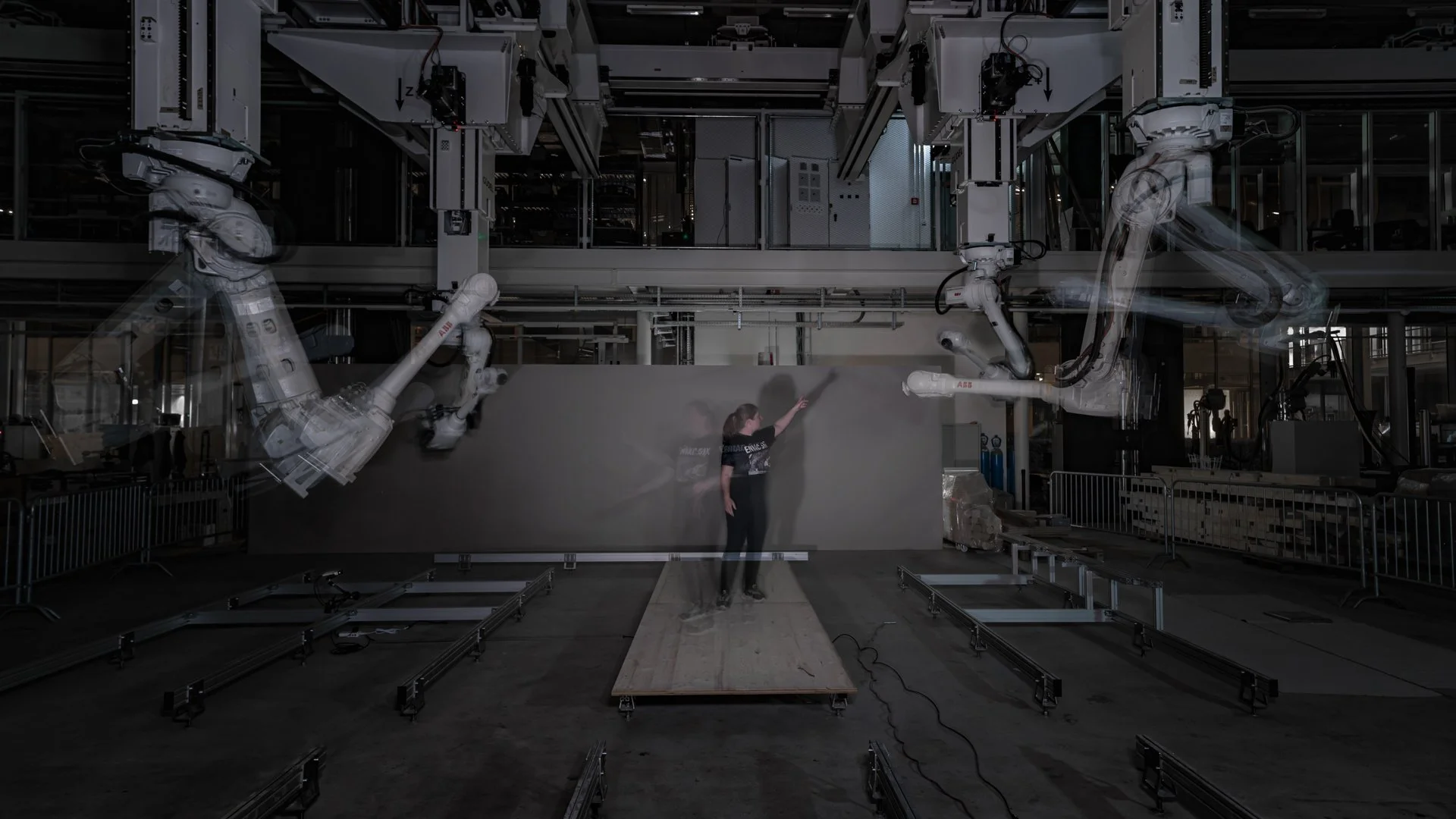
Madeline Gannon interacting through gesture and proximity with non-humanoid industrial robot arms in Other Natures
Future path · form, motion, proximityMadeline Gannon, Other Natures · ATONATON · Photo: Michael Lyrenmann

Future versions

AControlled baseline
Fixed media · generic system · immersive room
Test authorization
BEmbodied presence
Physical proxy · direct interaction · Motion · proximity
Test presence
CEvidence thresholds
Sensing · uncertainty · missing data · fallback
Test evidence needs
DForm effects
Humanoid · non-humanoid · ambient
Test embodiment

Better-calibrated trust

Capability is not authority.

Evidence · Consent · Oversight · Reversibility · Human fallback · Accountability
The goal is not to make people trust embodied AI more or less. It is to help people calibrate trust—to see, question, and revise what authority a system is given before difficult-to-reverse defaults harden into infrastructure.

Presentation controls

Space reveal / advance

return

F full screen · O overview

Home reset to opening · End final slide

Mouse wheel, trackpad, and vertical swipe also advance.